Real estate website: the must-have pages and features
The pages and features every estate agent or property website needs, from searchable listings and detailed property pages to agent profiles, valuation requests and local guides.
A real estate website needs searchable property listings, a detailed page for every property, agent profiles, a valuation or appraisal request, local area guides and clear contact options on every page. Behind the scenes, the listings should live in a CMS so you can add, update and remove properties in minutes without touching the design. Get those basics right and your site works as a 24-hour shop window for buyers, renters and sellers.
This guide covers the pages to build, the features each one needs and the mistakes that cost agents enquiries. It applies to independent estate agents, lettings agencies, property developers and solo agents alike.
What pages does a real estate website need?
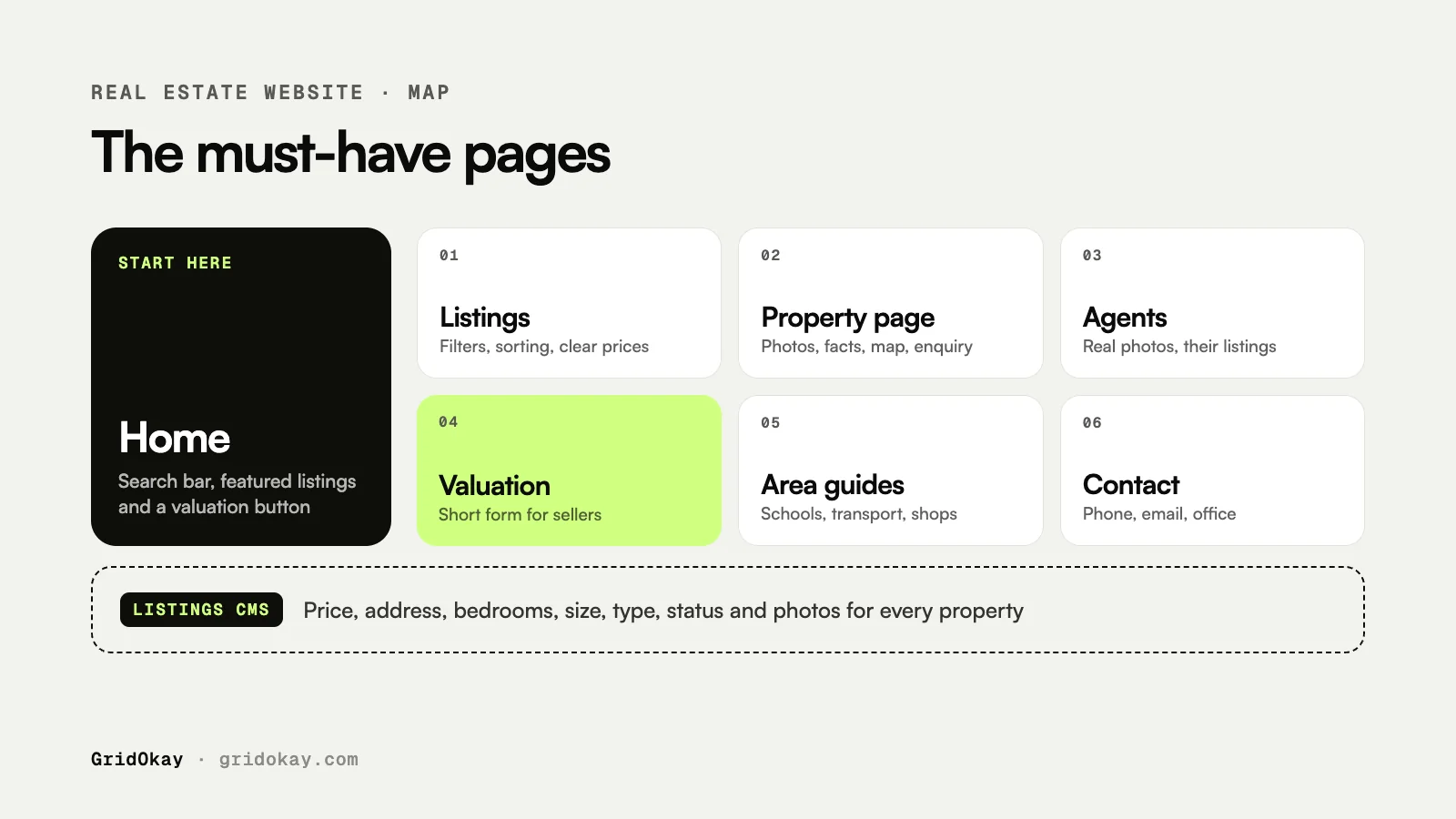
Most property websites are built from the same core pages. You can start small, but these are the ones visitors expect to find.
| Page | What it does | Must include |
|---|---|---|
| Home | Shows who you are and what you sell | Search bar, featured listings, valuation button |
| Listings | Lets visitors browse every property | Filters, sorting, clear prices |
| Property page | Sells a single property | Photos, key facts, map, enquiry form |
| Agents | Puts faces to the business | Photos, contact details, their listings |
| Valuation | Wins new sellers and landlords | Short form, what happens next |
| Area guides | Helps buyers choose a location | Local facts, schools, transport |
| About and contact | Builds trust and makes contact easy | Office address, phone, email, hours |
How should property listings work?
Listings are the heart of the site, so they should be quick to browse and easy to keep up to date.
- Use a CMS collection. Each property is one item with fields for price, address, bedrooms, bathrooms, size, type, status and photos. Both Framer and Webflow have a built-in CMS that handles this well.
- Add search and filters. Let visitors filter by location, price range, bedrooms and type, such as house, flat or commercial.
- Show the status. Mark properties as for sale, to let, under offer or sold so visitors never enquire about something that has gone.
- Keep cards consistent. Every listing card should show the same facts in the same place: photo, price, area and the key numbers.
What makes a good property page?
The property page is where a visitor decides whether to get in touch. It needs to answer their questions without making them call.
- A large photo gallery with good quality images, starting with the best one.
- The price, address or area, and the key facts: bedrooms, bathrooms, size and type.
- A clear written description that covers the layout, condition and highlights.
- A floor plan, if you have one.
- A map showing the location.
- The agent handling the property, with their photo and contact details.
- An enquiry or viewing request form, kept short.
- Similar properties, so visitors keep browsing if this one is not right.
Why do agent profiles matter?
People buy and rent through people. A profile page for each agent, with a real photo, a short bio, their areas and their current listings, makes the business feel personal and trustworthy. Link each property page to the agent who handles it, so visitors know exactly who they will be speaking to.
How do you get more valuation requests?
For many agencies, new sellers and landlords are worth more than buyers. A clear “Book a valuation” button in the navigation and on the homepage gives them an easy way in. Keep the form short: name, contact details, property address and the best time to call. Then say what happens next, for example that an agent will contact them to arrange a visit.
Should a real estate website have area guides?
Yes, if you have the time to write them well. Area guides help buyers who are new to a location and they give your site useful content for search. A good guide covers the feel of the area, transport, schools, shops and green spaces, with links to your current listings there. Our Framer SEO checklist explains how to give each guide a clear title and description so it can rank.
What builds trust on a property website?
- Real reviews. Show genuine reviews from past clients, with their permission. Never invent or edit them.
- Accreditations. Display the professional memberships and redress schemes you actually belong to.
- Clear fees. If you are a lettings agent, make your fees easy to find. In some countries this is a legal requirement, so check the rules where you work.
- Up-to-date listings. Old or sold properties left online make the whole business look careless.
- Contact details everywhere. Phone, email and office address in the header or footer of every page.
Common mistakes on real estate websites
- Slow pages caused by huge, uncompressed photos.
- Listings that are hard to filter on a phone.
- Property pages with no price or no clear way to enquire.
- Long enquiry forms that ask for too much.
- A design that has not been updated in years, which makes visitors wonder if the agency is still active.
Frequently asked questions
How much does a real estate website cost?
It depends on how custom it is and how many features you need. A template is the quickest and lowest-cost start, while a custom design costs more. Our guide to how much a website costs gives typical ranges.
Can I connect my property feed or portal listings?
Often yes, but it depends on your software and website platform. Some setups import listings automatically, others need a developer. Many smaller agencies simply add properties by hand in the CMS.
What other pages should I add later?
A blog, a lettings or landlord services page, and pages for each area you cover all help. Our checklist of pages every small business website needs covers the basics such as privacy and terms.
Does GridOkay have a real estate template?
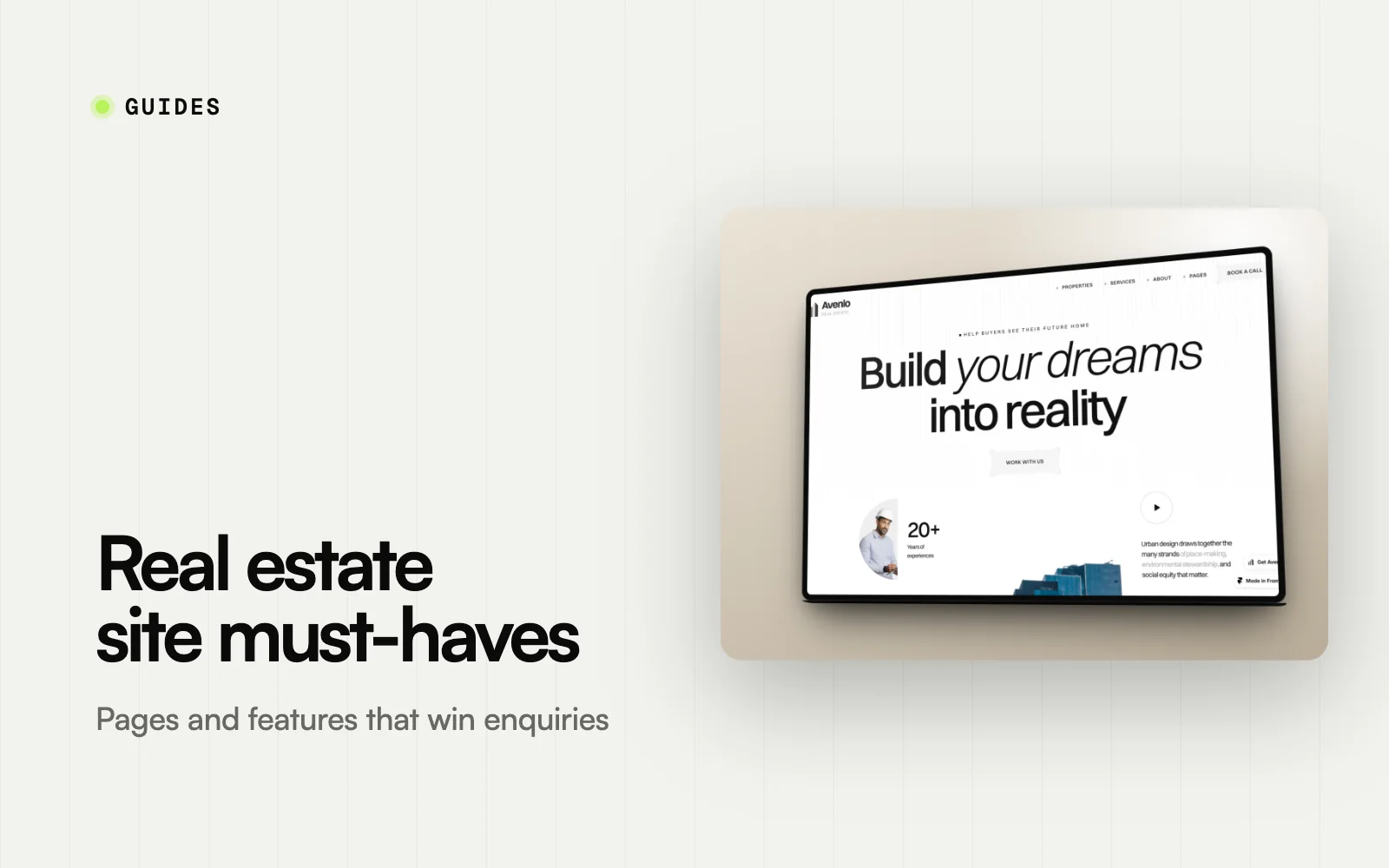
Yes. Avenlo is our free Framer template for real estate, so you can start from a finished design and add your own listings. If you need something tailored to your agency, see our services.